







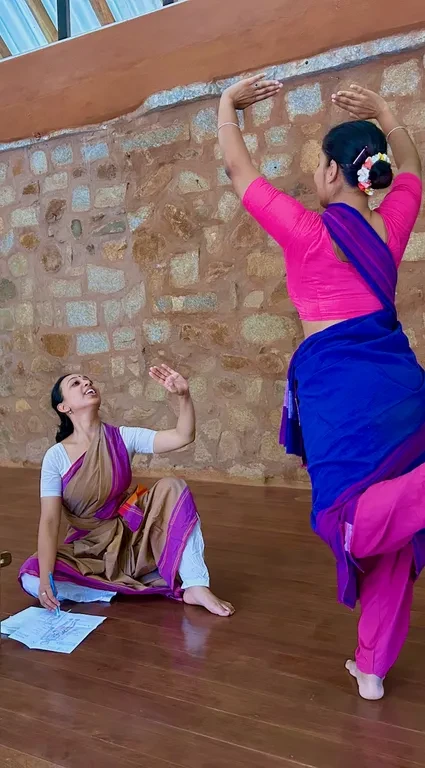
Vihāra
Living the Dance at Nrityagram
A residency for practice, pause, and possibility,
in its own rhythm.
A fully funded, month-long residency for dancers to step away from performance and remain with their work. Without deadlines. Without expectation. Only time. And the space to return.
A Space for Time
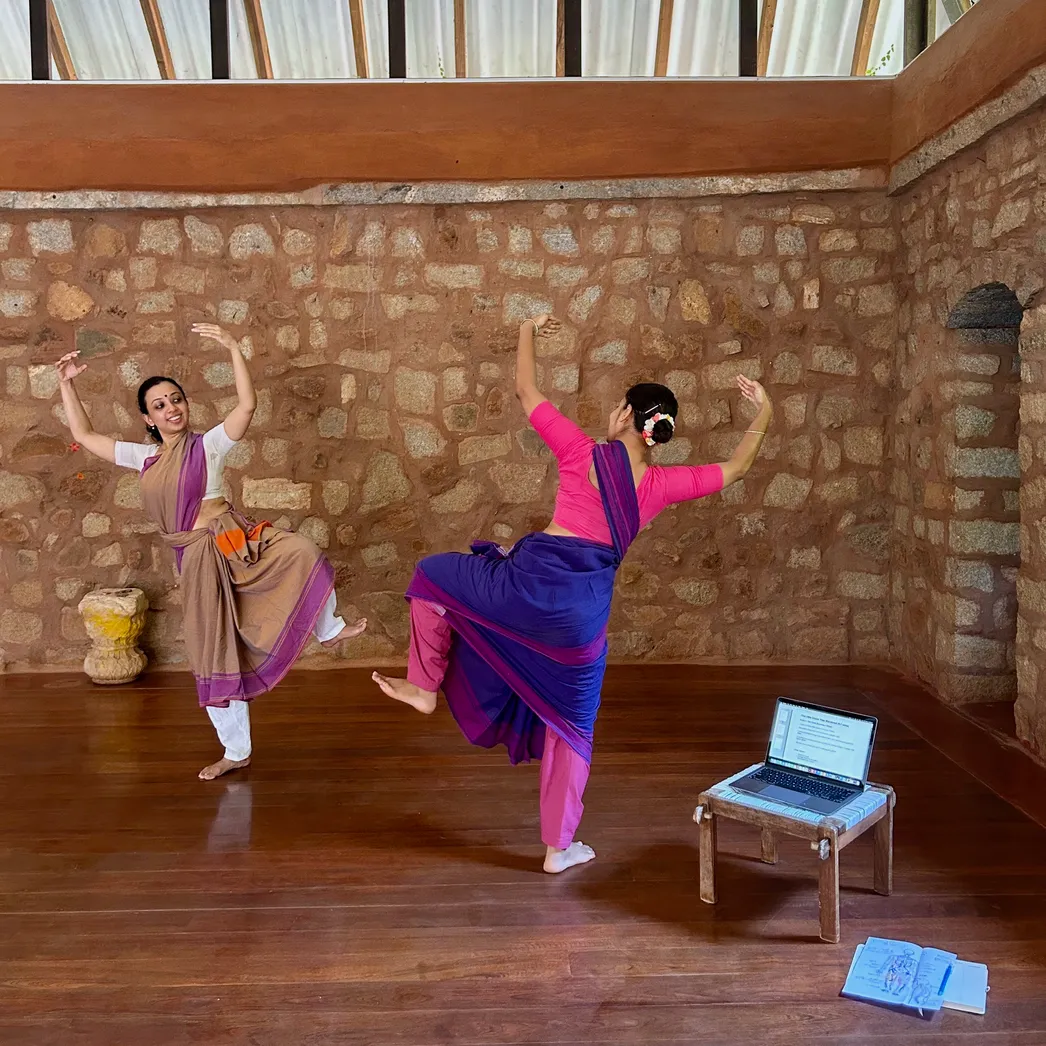
Uninterrupted, unmeasured time is rare.
In the life of a dancer, work gathers around rehearsals, timelines, and the quiet pressures of sustaining a life in dance. What recedes is time not asked to become anything.
Here, there is a pause.
A return — to the body, to listening, to attention, and to what begins to unfold over time.
Nothing to produce.
Nothing to resolve.
Only the work — held, repeated, allowed to change.
Why This is Vital
Artistic growth asks for time. For continuity. For the patience to remain with a question.
Across India, there are few spaces that support self-directed practice in Indian classical dance over sustained periods. In their absence, inquiry is often interrupted, just as it begins to deepen.
This residency arises from that need.
It offers an environment where time can unfold in its own rhythm, where attention can settle, and where work can continue, shift, or simply remain.
Time here is lived — inhabited, and shaped from within.
The Experience
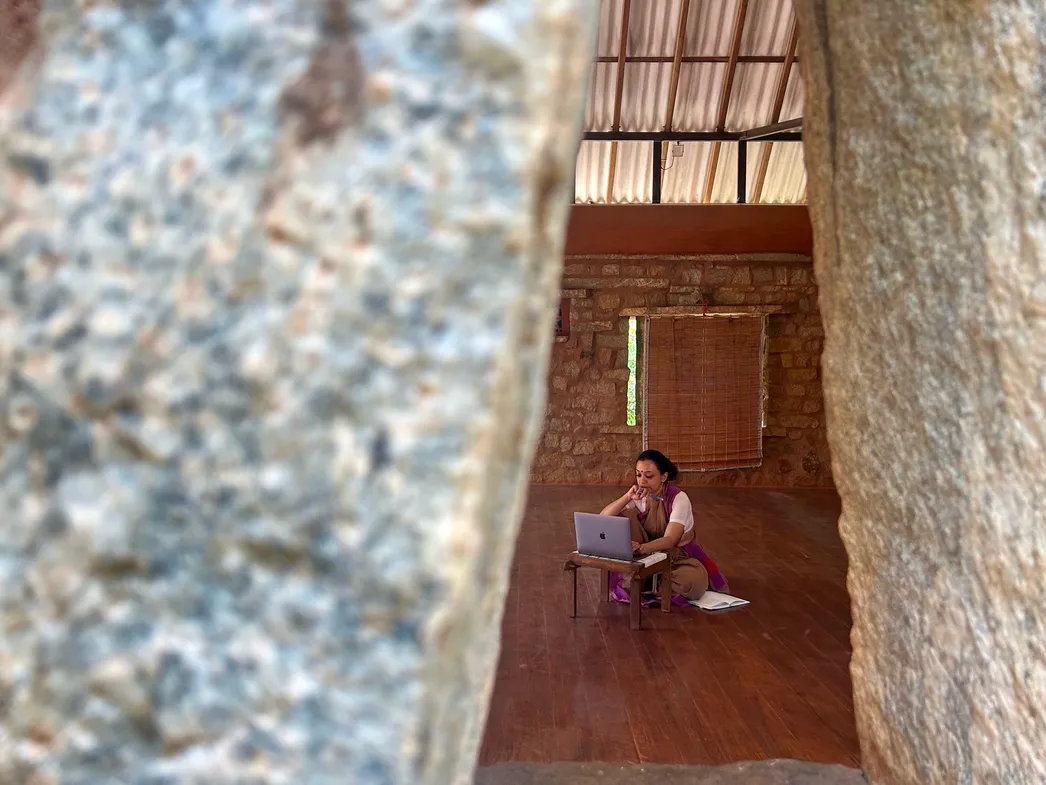
Days move in a quiet rhythm — between movement, rest, reflection, and occasional exchange. The day takes shape as you enter it.
This might mean:
- returning, again and again, to something essential
- following an impulse, without needing to know where it leads
- spending time in the studio, or away from it
- reading, thinking, or sitting in stillness
Or simply arriving each day — and beginning again
Living at Nrityagram
Nrityagram is a place shaped by attention and continuity.
Life here moves in gentle cycles — shared meals, solitary hours, and conversations that arise without plan. There is space for solitude, and a quiet sense of being alongside others.
You are alone with your work, and at the same time held within a larger rhythm.
What Is Offered
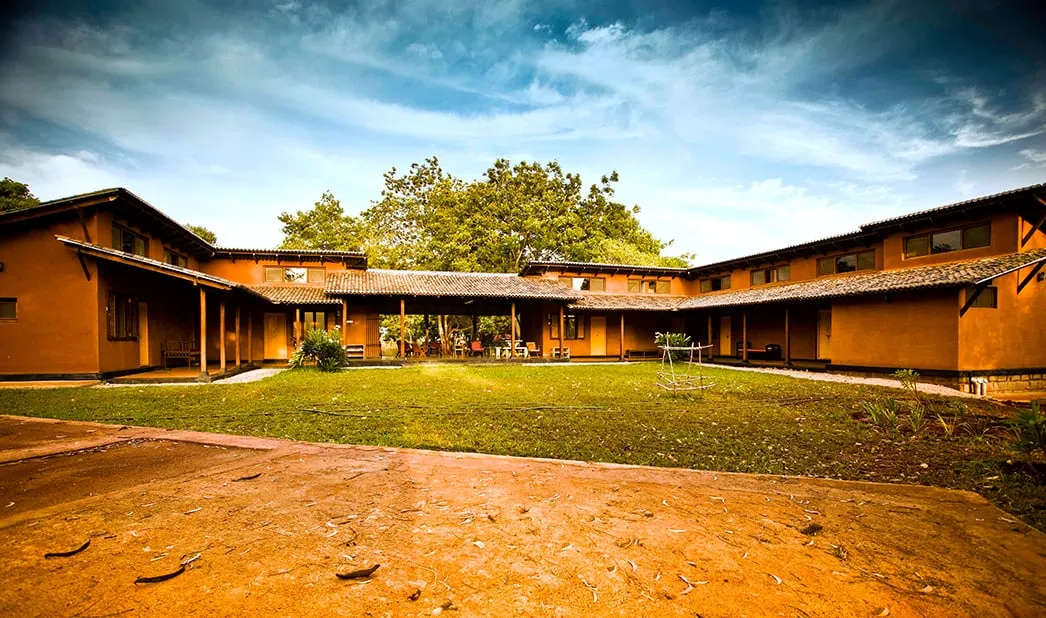
The residency is fully funded and includes:
- Accommodation at Kula: Residence for Artists
- All meals
- 24/7 access to dance studios
- Access to indoor and outdoor spaces, including the amphitheatre and yoga centre
- Wi-Fi and basic administrative support
Residents are responsible only for:
- Travel to and from Nrityagram
- Personal expenses beyond the programme
At its core, what is offered is simple:
the conditions that allow work to continue, deepen, and unfold over time.
Who This Is For
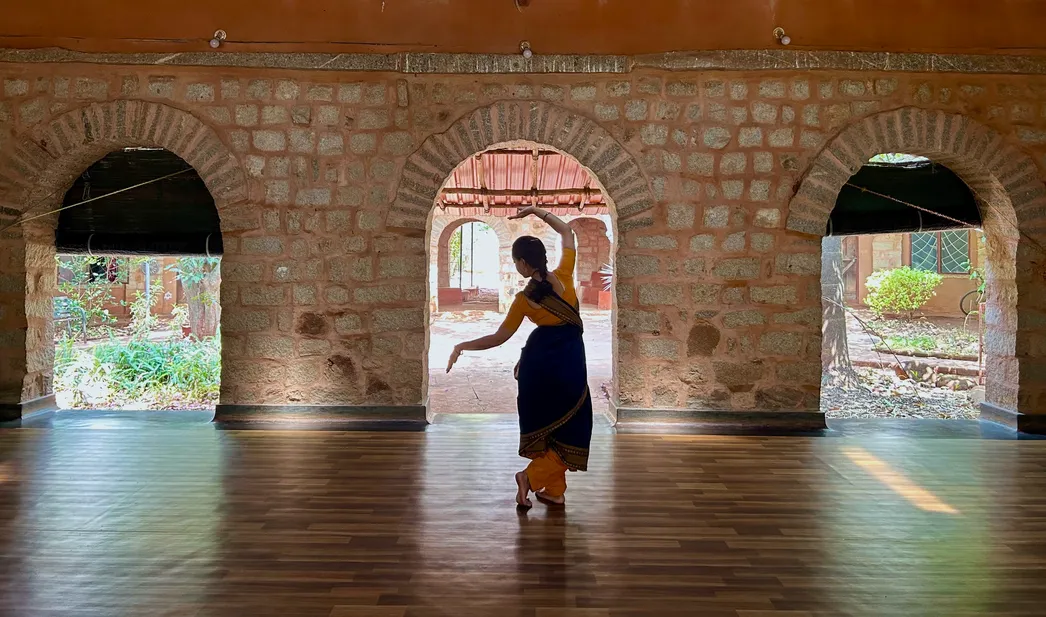
This residency is open to classical Indian dancers across all forms, with at least ten years of training. Individuals, duos, and small groups are welcome.
This is a self-directed residency. The structure is intentionally light, allowing each dancer’s work to unfold in its own way.
It asks for a particular kind of readiness — to work independently, to remain with one’s work, and to trust what may emerge over time.
Residency Details
First Residency Period: 1 August – 30 September
Duration: 4 weeks per participant
You may choose:
- One continuous 4-week stay, or
- Two blocks of 2 weeks within the residency period
Application Deadline: 24 May, 2026
Selection Announcement: 30 June, 2026
In its inaugural year, the residency will host 30 dancers, made possible with support from the Samagata Foundation.
Dance Commons
This residency is part of Dance Commons — an evolving initiative that reimagines the dancer’s journey as a shared one.
It opens the possibility for exchange, resource-sharing, and collective thinking, lightly held.
What begins here may be subtle.
It continues — in time, and in the work that follows.
FAQ
Is this a mentored or guided residency?
Is there any expectation to create or present work?
What does a typical day look like?
Who is this residency best suited for?
What is meant by “fully funded”?
Can I apply with others?
Can I split my residency period?
Will there be interaction with other residents?
What facilities are available?
Is prior performance experience required?
Can I teach or present work during the residency?
How are participants selected?
Apply
Applications are open to classical Indian dancers with a minimum of ten years of training.
Selection is made with attention to clarity of intent and readiness for a self-directed process.
Application Deadline: 24 May, 2026
Selected residents will be notified by: 30 June, 2026
For any inquiries please contact:
programmes@nrityagram.org
If this feels like the right time, you are welcome.